If you’re looking for the best way to generate power for off-grid needs or as a backup solution during power outages, you might be wondering whether it’s better to invest in a fuel-powered generator or a battery power station.
Each solution has its own pros and cons. Generators are typically more expensive to run and require a constant supply of fuel, as opposed to portable power stations, which are generally cheaper to run but generally produce less power.
Both generators and portable power stations can provide power in emergencies, such as a power outage in the national grid or if power is required in remote locations.
You need to consider your specific requirements.
- How much power do you actually need?
- Where will you be using it?
- When are you likely to be using it?
- Also, what is your access to fuel?
Portable power stations
What are they?
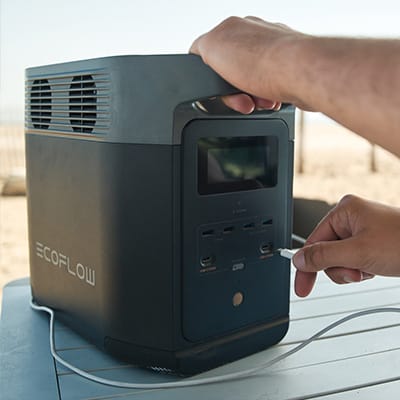
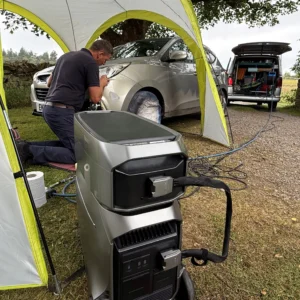
Portable power stations are a more recent option in the portable power market and rely on charging a battery which stores electricity rather than generates it (unless linked to solar panels). These are charged usually from the grid (AC power) and the device moved to the location the power is needed.
Pros:
- Inexpensive to run – free if connected to solar panels.
- Zero emissions: a clean supply of power with no harmful fumes at all. Can be used in poorly ventilated areas.
- Easy to move around.
- No ongoing costs of refuelling with petrol.
- Can be easily recharged from the mains at off-peak tariff rates.
- Safer due to the refuelling aspect.
- Significantly quieter – usually less than 30 decibels with generators often over 55 Db.
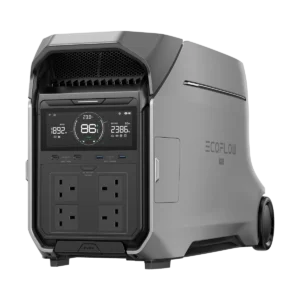
- Usually incorporates a significant number of both AC and DC ports.
- Many different ways to recharge the power stations including via solar panels and in transit via an alternator charger.
- Can easily last over 10 years if used appropriately.
- More environmentally sound compared to petrol generators.
Cons:
- Recharge time is usually around 1 hour, if mains AC charging is used.
- Output is limited to the battery’s size and capacity. More powerful portable power stations are being developed all the time.
- Generally, a higher initial purchase price.
- Portable power stations are robust and durable, but are not waterproof and are not designed to stand outside in the rain. They must be kept dry at all times.
Portable petrol generators
Pros:
- Relatively inexpensive to purchase.
- Can be used externally in many different locations.
- Generally durable in design.
Cons:
- Produce harmful carbon monoxide fumes so it is essential for them to be kept very well ventilated / outside. Do not use within your home.
- You must keep them well-maintained to work properly.
- Even if they are sold as silent machines, they are far from silent and can be annoying to listen to when in use.
- The fumes are also very smelly, which is most off-putting especially if located near eating areas.
- They are more time-consuming and faffy to refill with petrol and oil.
- Keeping the fuel and refuelling can be a dirty job and more dangerous.
- Designed to run for many hours but not for constant use.
- Many locations and events do not allow generators due to noise pollution and emissions.