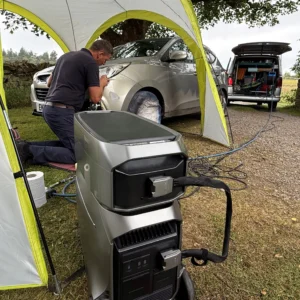
The use of portable power stations can really increase the flexibility of the user’s adventures staying in new places and even under canvas.
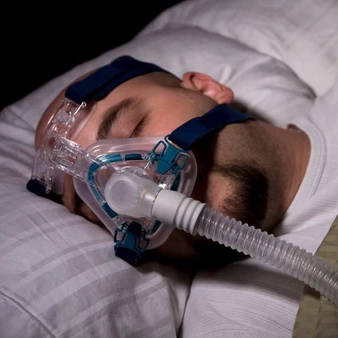
Portable power stations are lightweight, durable and easily movable mobile battery units allowing the storage of electricity and use in either in a DC or AC format, anywhere you wish. Most CPAP machines operate using AC power. These are a very popular power backup for CPAP to eliminate the risks involved when mains power is down or when travelling or camping and so their popularity is still on the increase.
The key points that need to be considered are:
1. Power
From experience the ideal portable power station should have a capacity of at the very least 350Wh to ensure the sufficient runtime for the machines overnight. Most CPAP machines power needs range from 40 – 60 watts but some do go a lot higher even up to 150 watts. First of all, you need to work out the exact power needs of your machine and multiple generously by the number of hours of operation. Obviously the machine will need a constant source of power all night long. Also ask yourself if you are recharging the power station every day?
2. Noise
The power stations are very quiet but not totally silent and some are a lot noisier than others. Most small power stations, if they are running just the CPAP machine will be fine but if you are intending to draw power simultaneously for other devices then the noise levels will increase.
3. Cost
This is certainly a serious consideration but to be honest we would always recommend you prioritise the features of the power station over the cost for this application.
4. Portability
Generally most power stations in and around the 350Wh output will weight around the 5-8 kg, but if you are looking at more powerful machines say with a 1000watt output the weight will be more like 12-15kg and so will become much more of a consideration especially if you are planning to use it more for travel than homebound backup.
5. Display light emittance
Most portable power stations will have digital displays to indicate the level of power in the unit and what power is being drawn and this needs to be considered if you are a person who may find this an annoyance.
6. Recharging
If you are intending to be off-grid for a number of days without access to mains AC power then you may well have to consider portable solar panels which fold out recharge the machine. Although these are generally reasonably efficient you do have to realise that recharging via solar is much slower, and lets face it less reliable than via the mains or other options like vehicle alternator chargers. For charging through AC mains power most portable power stations can recharge fully in around 1 hour.
Another aspect to consider is that portable power stations are rugged but not waterproof, so please don’t leave then out in the rain or even damp conditions outside a tent!